
Problem Statement:-
Given the head of a linked list, return the node where the cycle begins. If there is no cycle, return null.
There is a cycle in a linked list if there is some node in the list that can be reached again by continuously following the next pointer. Internally, pos is used to denote the index of the node that tail's next pointer is connected to (0-indexed). It is -1 if there is no cycle. Note that pos is not passed as a parameter.
Do not modify the linked list.
Link: https://leetcode.com/problems/linked-list-cycle-ii/
Problem Explanation with examples:-
Example 1
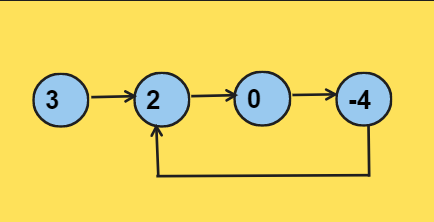
Input: head = [3,2,0,-4], pos = 1
Output: tail connects to node index 1
Explanation: There is a cycle in the linked list, where tail connects to the second node.
Example 2
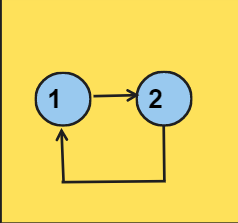
Input: head = [1,2], pos = 0
Output: tail connects to node index 0
Explanation: There is a cycle in the linked list, where tail connects to the first node.
Example 3

Input: head = [1], pos = -1
Output: no cycle
Explanation: There is no cycle in the linked list.
Constraints
The number of the nodes in the list is in the range [0, 10^4].
-10^5 <= Node.val <= 10^5
pos is -1 or a valid index in the linked-list.
Intuition:-
As we know this is a famous problem, we can use the floyd cycle detection algorithm to solve this problem.
We can use two pointers, one is slow, and the other is fast.
We can use the fast pointer to move two steps, and the slow pointer to move one step.
If there is a cycle, the fast pointer will meet the slow pointer.
If there is no cycle, the fast pointer will meet the end of the linked list.
After we find the meeting point, we can use the slow pointer to move one step, and the fast pointer to move one step.
When the slow pointer and the fast pointer meet, we can return the slow pointer as the start of the cycle.
Solution:-
Initialize the
slow pointerand thefast pointerto theheadof the linked list.slow = head fast = headRun a while loop, if the
fast pointerand thefast pointer.nextis not None, we can move theslow pointerone step, and thefast pointertwo steps.If the
slow pointerand thefast pointermeet, we can break the loop. This means we detected the cycle.If the
fast pointerand thefast pointer.nextis None, we can return None as there is no cycle.while fast and fast.next: slow = slow.next fast = fast.next.next if slow == fast: break else: return NoneAfter we detect the cycle, we can initialize the
slow pointerto theheadof the linked list.Run a while loop, if the
slow pointerand thefast pointerare not equal, we can move theslow pointerone step, and thefast pointerone step as well.
When the slow pointer and the fast pointer are equal, we can return the slow pointer or the fast pointer as the start of the cycle.
slow = head
while slow != fast:
slow = slow.next
fast = fast.next
return fast
Code:-
JAVA Solution
public class Solution {
public ListNode detectCycle(ListNode head) {
ListNode slow = head;
ListNode fast = head;
while (fast != null && fast.next != null) {
slow = slow.next;
fast = fast.next.next;
if (slow == fast) {
break;
}
}
if (fast == null || fast.next == null) {
return null;
}
slow = head;
while (slow != fast) {
slow = slow.next;
fast = fast.next;
}
return fast;
}
}
Python Solution
class Solution:
def detectCycle(self, head: Optional[ListNode]) -> Optional[ListNode]:
  slow = head
  fast = head
  while fast and fast.next:
      slow = slow.next
      fast = fast.next.next
      if slow == fast:
          break
  else:
      return None
slow = head
while slow != fast:
    slow = slow.next
    fast = fast.next

return fast
Complexity Analysis:-
TIME:-
Time complexity is O(n), as we only need to run one loop for increasing the slow pointer and the fast pointer.
SPACE:-
Space complexity is O(1), as we only need to use two-pointers.


